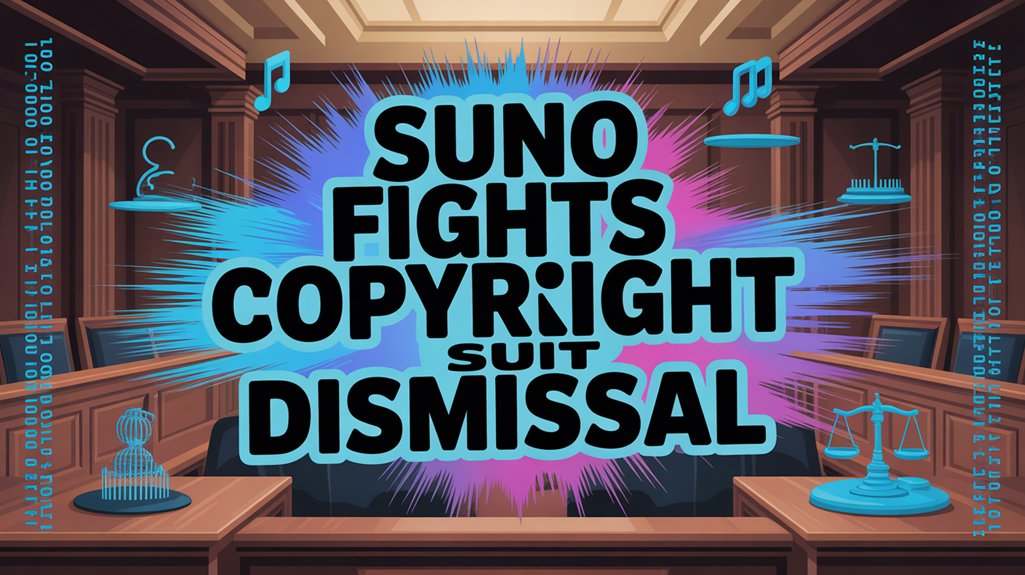
Music AI startup Suno intensified its legal defense on November 21, 2025, filing a reply memorandum that vigorously challenges key portions of a copyright infringement lawsuit brought by independent artists. The company seeks dismissal of claims alleging it created infringing derivative works, arguing that plaintiffs failed to identify any Suno-generated outputs resembling the eight specific songs cited in their complaint.
The legal maneuver represents Suno’s strategic effort to narrow the case to what it calls the “core issue” – whether training AI models on copyrighted music qualifies as fair use. “Without identifying any works that allegedly infringe their derivative work rights… claim cannot move past the pleading stage,” Suno’s reply states, highlighting that plaintiffs had continuous access to the public Suno platform but provided no evidence of infringing outputs.
Led by country artist Tony Justice, the plaintiffs allege Suno scraped and duplicated copyrighted songs for AI training, claiming the AI ingests and stores songs in its neural network. Their amended complaint accuses Suno of violating exclusive rights by using these songs to prepare derivative works, an allegation Suno contends lacks specificity.
Suno also seeks dismissal of an unfair competition claim under the Tennessee Consumer Protection Act, arguing it fails to allege “passing off” as plaintiffs’ services and is preempted by the Copyright Act since it merely repackages copying allegations. A central part of the defense involves Suno’s argument that YouTube’s system is a copy control mechanism rather than access control under DMCA provisions.
The legal team representing the plaintiffs, including Krystle Delgado and Josh Sanford from EKSM, has emphasized the distinction between independent artists’ rights and those of major record labels in their arguments. Artists could have better protected their interests by registering with performance rights organizations that collect and distribute royalties for public performances of copyrighted music.
The legal battle unfolds against a backdrop of related lawsuits from major record labels, though Warner Music Group recently settled with Suno on November 25, 2025, announcing a partnership that includes platform changes and artist opt-in options. This settlement comes as musicians increasingly explore sync deals as a profitable alternative to traditional royalty streams in the evolving digital landscape.
Now valued at $2.45 billion after recent fundraising, Suno faces scrutiny in a legal landscape shaped by the U.S. Copyright Office‘s May report stating fair use does not excuse unauthorized training on expressive works.
The case could considerably influence how U.S. courts treat AI training on copyrighted music, with experts anticipating Suno will heavily rely on fair use defense against the remaining infringement claims.