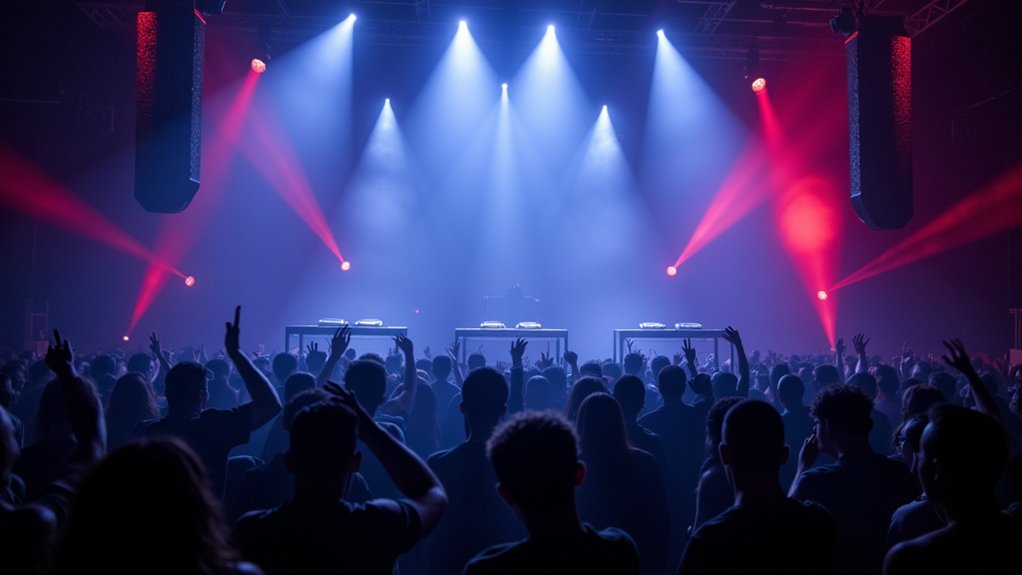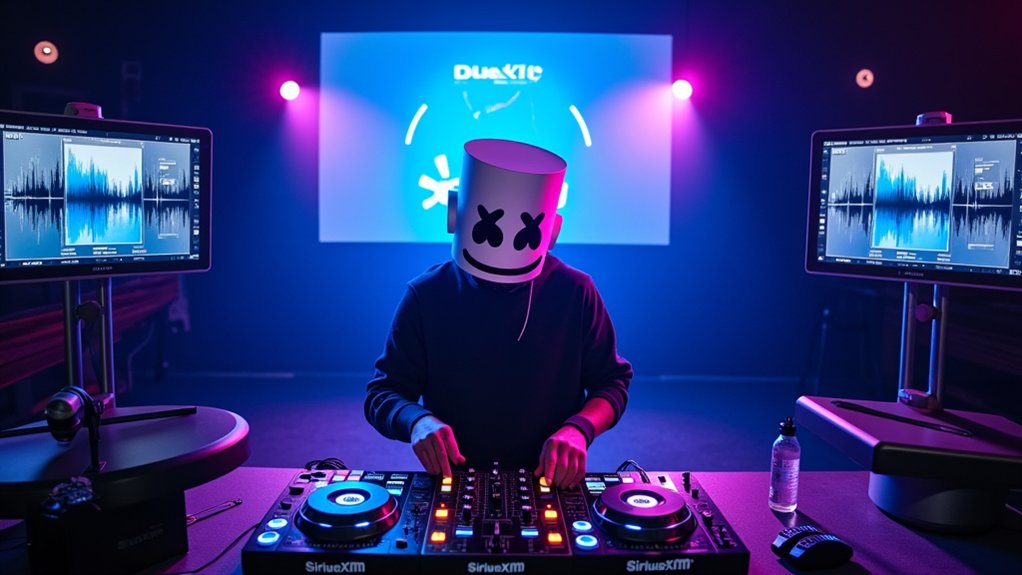
A revolution in live electronic music performance has emerged with L-Acoustics’ groundbreaking Spatial DJ System, which transforms traditional stereo DJ sets into immersive three-dimensional sonic experiences. The system employs proprietary Source Separate technology, a sophisticated machine learning platform that decomposes standard stereo tracks into discrete stems—beats, basslines, melodies, and vocals—in real time with remarkably low latency, preserving the rhythmic integrity essential for dance music.
Electronic music enters a new dimension as L-Acoustics revolutionizes DJ performances through real-time stem separation and spatial audio manipulation.
Unlike previous attempts at spatial audio for DJs, this innovation requires no modification to existing setups or workflows, making it immediately accessible to professionals accustomed to traditional gear. The system seamlessly integrates with both digital and analog DJ equipment, ensuring maximum flexibility for performers. The technology routes these separated stems directly into L-Acoustics’ L-ISA spatial mix engine, allowing DJs to position and dynamically move individual elements throughout physical space during performances. The system includes an intuitive FX Engine that enables real-time dynamic spatial control to enrich sonic experiences during live events.
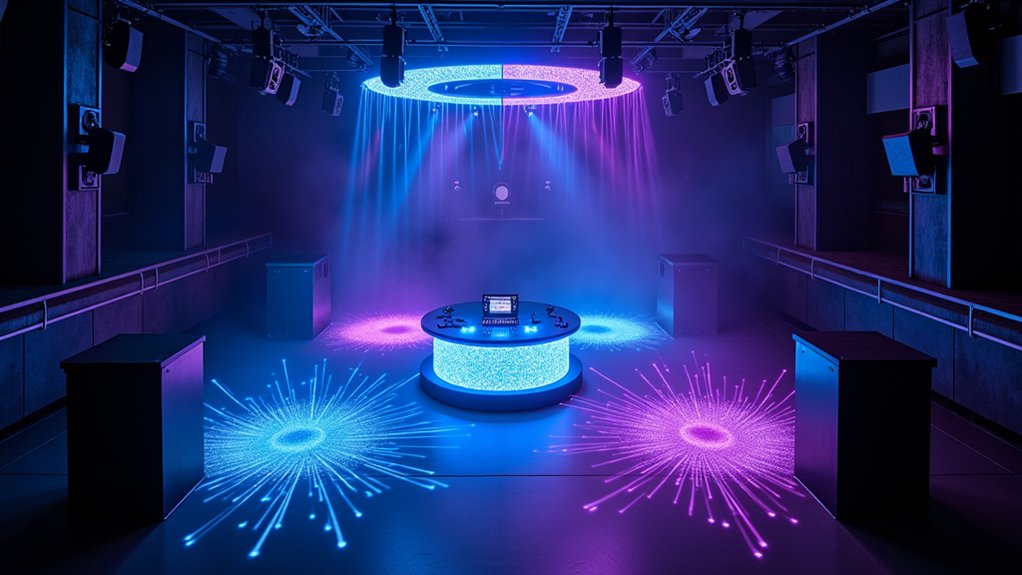
The system’s scalability makes it adaptable for venues of various sizes, supporting configurations from basic 2D setups to full 3D environments that cover approximately 650 square meters with consistent sound quality. Each venue can customize the sonic experience through thoughtfully positioned L-Acoustics loudspeaker arrays, amplified controllers, and specialized processors that work in concert to create enveloping soundscapes. Proper sound checking before performances ensures optimal spatial audio delivery, allowing artists to verify that all elements of the immersive experience function as intended.
For audiences, this represents a fundamental shift in electronic music consumption. Rather than the familiar stereo field, listeners experience basslines that might surround them while vocals soar overhead and percussion elements dance through the space. These multi-dimensional journeys create deeper emotional and physical connections, potentially redefining expectations for club experiences by 2025. Artists leveraging this technology can extend their platform reach by creating unique spatial performances that distinguish them from traditional streaming experiences.
The Amsterdam Dance Event, electronic music’s premier global gathering, represents the perfect showcase for this technology’s transformative potential. By providing DJs with intuitive interfaces requiring minimal technical knowledge to manage complex spatial mixes, L-Acoustics has democratized access to what was previously reserved for high-budget concerts and installations.
As venues seek to differentiate themselves in competitive markets, systems that deliver enhanced audience engagement through immersive sound environments may become the new standard, effectively ending the four-decade dominance of stereo as electronic music’s primary delivery format.